Portal by Spotify cut my Claude Code token usage by 90% | Spotify Engineering
Most of what an AI coding agent does for me isn't thinking. It's I/O.
engineering.atspotify.com
The stock market is booming, unemployment is low, interest rates (all things considered) are being successfully kept in check. Is this the roaring ’20s we were promised?
Obviously, the above is not totally sincere. People are, to varying degrees, unhappy with their current economic situation and fear it will get worse. Consumer sentiment is low, and Donald Trump’s ratings are through the floor. But many macroeconomic indicators paint a much sunnier picture.
Despite its (superficially) healthy appearance, the US economy is facing some challenges…
The US is currently engaged in what some (anyone with a brain) would describe as an ill-advised conflict. Their adversary has a proven history of being unexpectedly resilient, strategic, and borderline petty (just ask Jimmy Carter why he never got to welcome the hostages home).
They’re currently stuck in a stalemate. The Strait of Hormuz is closed, and 20% of the world’s oil supply is cut off as a consequence. For the last 6 months, the message has been that Iran is on its knees and the strait would open any day now. That unfortunately does not look likely.
The US are reported to have spent around $40bn on this campaign so far. They have resorted to redirecting Patriot Missile supplies from Ukraine to protect their military bases in the Gulf. They have imposed their own blockade on the strait. They have levied what were intended to be absolutely suffocating economic sanctions on the Islamic Republic. As an outside observer, it seems as though they have no cards left to play. Or at least none that don’t contravene the TPNW.
Iran is in a weak position. Its economy has been hit hard, its leadership was decimated, and its infrastructure badly damaged. However, it’s yet to show its full hand.
Bahrain depends on industrial desalination plants for 100% of its drinking water. Every Gulf ally of the US is in a similar, if not quite as extreme, boat. Outside of direct, retaliatory strikes (in response to the US attacking Iranian plants), Iran has so far refrained from targeting these plants with ballistic missiles.
It’s likely that, despite their indirect involvement in America’s campaign, Iran still sees its neighbours as potential future allies. Countries with which they want to maintain a level of diplomacy. Unfortunately, it is also conceivable that Iran is simply waiting for patriot missile stocks to be depleted enough that desalination plants are left undefended.
The above basically illustrates how I see the situation with Iran. The US have few remaining levers to pull. Iran is under immense pressure but shows no clear signs of buckling and is yet to exhaust all options. They also have a history of drawing US presidents into unfavourable situations and holding them there for as long as it takes for their domestic political standing to drain away.
So, basically, I think it’s unlikely that Brent crude drops too far below $100 any time soon.
For the last 9 months, the US Treasury has been neck-deep in one of its biggest foreign currency interventions in history, and it’s not working. In that time it has, in fits and bursts, coordinated with the Bank of Japan to collectively sell approx $100bn dollars worth of USD & EUR to prop up the value of the yen. On each intervention, the market responded, but the rally wasn’t sustained, and the yen restarted its slump in the weeks & months after.
This is primarily a problem for the US because Japan is a massive investor in a) the American stock market and b) US government bonds. The Japanese government alone holds over 1tn dollars of the latter. Japan also has the highest debt-to-GDP ratio in the world (there’s a significant caveat here; ~97% of that debt is held domestically, but it’s still a problem) and runs budget deficits every year. This makes the Japanese economy extremely sensitive to interest rate changes.
With this context, the US intervention in the JPY/USD market makes sense. They want to avoid the yen becoming further devalued because the consequences would (eventually) look something like:
The issue is that these interventions are inherently unsustainable. They’re a powerful tool because a relatively small sell of EUR or USD, executed at a time of thin market liquidity, will crush most short sellers who hadn’t pre-emptively closed their position. But that doesn’t change the fact that, in the long run, it’s almost impossible to counteract macro-economic forces in a market that large. As such, if global inflationary pressure doesn’t ease, and/or the Japanese economy doesn’t start to show signs of real growth, it looks like this is only going in one direction.
Before I get stuck in here, I want to be clear that I think LLMs are a genuinely transformational technology. They already have numerous, commercially proven use cases, like engineering, finance, customer service, etc. It also seems like technological improvements are accelerating rather than slowing down, as many had expected.
However, I do think we are currently in a bubble.
Over the last few years, capital deployment has been unprecedented. AI data centres continue to be built at an incredible rate, often financed by complex private credit deals made via special-purpose vehicles (SPVs), and involving residual value guarantees (RVGs). The use of SPVs allows companies to use subsidiaries to take on the debt, and associated risk, of building these data centers. RVGs allow them to improve lending terms by committing to buy some percentage of the resulting compute if market demand dries up. This leverages their strong financial standing to get favourable loan terms, without putting the debt on their balance sheet.
There’s nothing inherently wrong with these arrangements, but they are concerning on two fronts. First, the structure of these deals could be seen as a form of deceptive corporate accounting. Second, since AI investment is so hot right now, many private creditors in this market are willing to take on most of the risk to land these lucrative deals.
That’s fine for the fund managers and their bonuses, but many of these companies raise the majority of their capital from institutional investors like pension funds. Their decision to shoulder some of the riskiest deals in the ongoing AI arms race massively broadens the potential fallout of a collapse.
And a collapse, in my opinion, is possible. For a long time the fear was that models wouldn’t become good enough, fast enough. That they would be impressive but only narrowly commercialisable. By now it’s clear that LLMs will have a real, measurable and broad impact across most industries. The day-to-day job of a software engineer is totally different today than it was 2 years ago. AI-enabled tools are transforming (and potentially putting at risk) analyst roles in investment & banking. Customer support as a function is now manned at its front lines by AI agents.
It’s clear now that the models are good enough. And I think that’s the problem.
If you ask people working with LLMs every day when they first started really trusting the models to carry out meaningful tasks end-to-end, many will say the release of Anthropic’s model Claude Opus 4.6. There was a general sense that it was “intelligent” enough to understand and reason about what it needed to do and was also capable of staying on task through dozens of steps.
Models released since have certainly shown meaningful improvements, but Opus 4.6 seemed to be the first to unlock “real” use cases.
About a month ago Alibaba released a model called Qwen 3.8 Flash Next. This is how it compares to Opus 4.6 in benchmarks:
| Benchmark | Qwen3.8 Flash Next | Claude Opus 4.6 (Max) |
|---|---|---|
| Input cost (per 1M tokens) | $0.15 | $5 |
| Output cost (per 1M tokens) | $0.47 | $25 |
| Throughput | 102 tok/s | 38 tok/s |
| Coding | ||
| SWE-bench Pro | 62.5 | 53.4 |
| SWE-bench Multilingual | 81.0 | 77.5 |
| NL2Repo-Bench | 48.1 | 47.6 |
| Agent | ||
| CoWorkBench | 73.9 | 68.2 |
| JobBench | 55.7 | 36.6 |
| General | ||
| IFBench | 81.3 | 62.5 |
| GPQA Diamond | 91.7 | 91.3 |
| HLE | 35.9 | 40.0 |
| LiveCodeBench v6 | 91.9 | 88.8 |
| Agentic Multimodal | ||
| ClawEval-MM (Pass@3 / Average) | 64.4 / 60.4 | 52.5 / 54.7 |
| AndroidWorld | 84.5 | 62.0 |
| General Multimodal | ||
| ERQA | 72.3 | 40.8 |
| LVBench | 76.6 | 63.0 |
| RealWorldQA | 88.5 | 73.9 |
| MathVision Without CI (With CI not reported for Opus) | 90.6 (95.7) | 65.5 (—) |
| CharXiv (RQ) Without CI (With CI not reported for Opus) | 84.6 (90.6) | 66.0 (—) |
TLDR; it’s one hundredth the cost, three times as fast, and trounces it on almost every benchmark.
(Also - better models have been released since I started writing this blog post. I’m just not bothered to dredge up the details.)
I think this is where the real risk to the AI investment hype cycle exists. I would bet that over 90% of most companies’ AI queries could now be comfortably handled by an open-weight model for a fraction of the price. In fact, Spotify has already demonstrated something along those lines:
Portal by Spotify cut my Claude Code token usage by 90% | Spotify Engineering
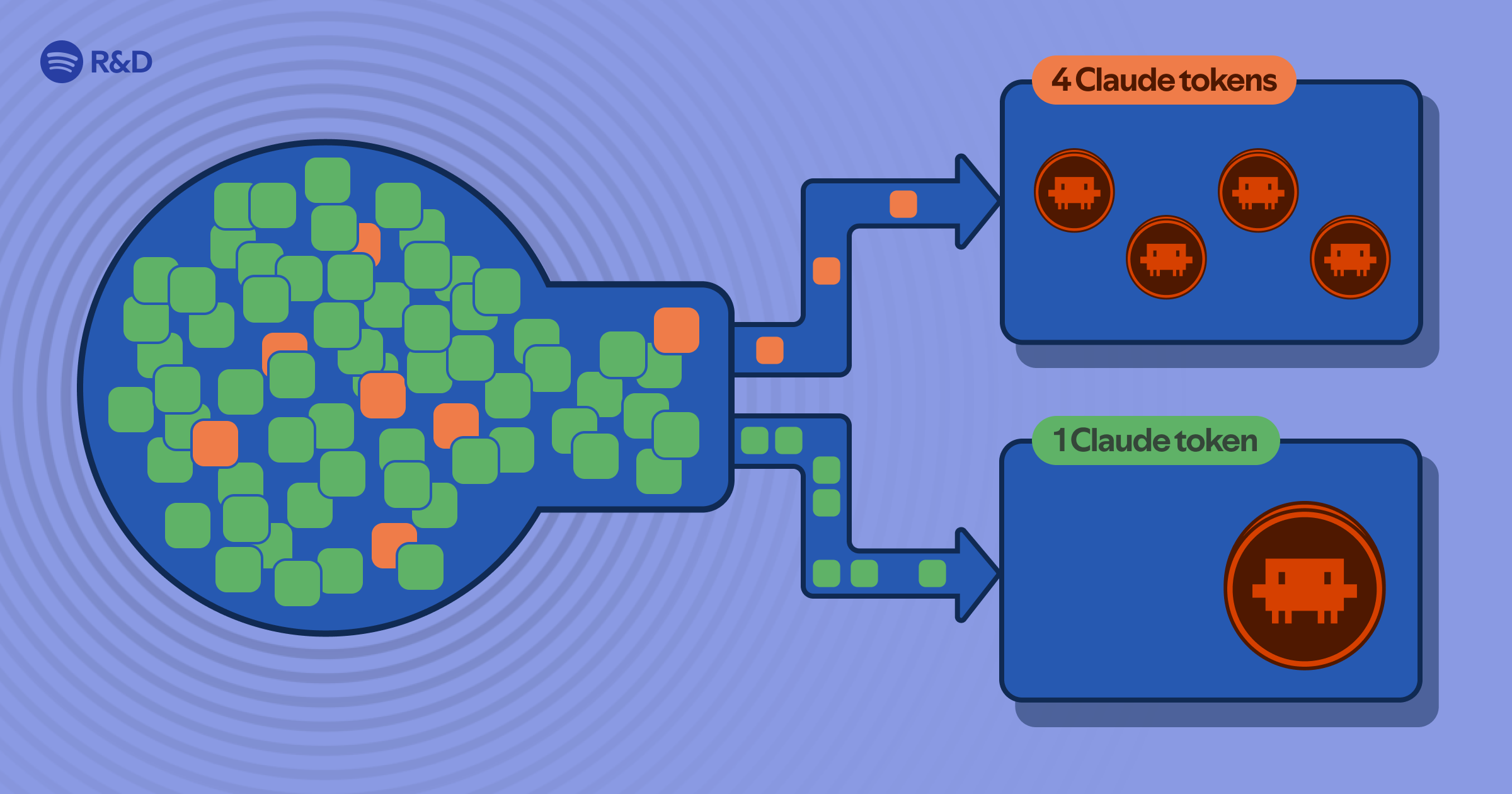
I also think the above blog post is already dated. The “cheap” model used was Google’s Gemini 2.5 Flash, which is considerably worse and more expensive than the Qwen model shown above.
I think the US is on shaky ground at the moment. That’s not to say that things cannot recover or that the issues described above are necessarily existential. But if I were looking for inspiration for some indulgent doomerism, that’s where I’d start.